Pacejka MF6.2 — Tire Modeling
Tire fitting and comparison of 6 tires from raw TTC data - Fitted with a Pacejka MF6.2 model.
Problem
While our team has a working Pacejka MF6.2 tire model (fitted to our current tires, credits to my predecessor), we do not have tire model backed justification for using the ones we currently use.
To combat this, I set out to compare our current tire combo (Hoosier 43100 18×6.0-10 R20, 7″ rim width) to 5 others to learn how our tires performed in comparison.
Overview
In our 2025/26 design cycle, our team moved from a Pacejka MF5.2 tire model to a Pacejka MF6.2 model. Using the updated tire fitter, I found coefficients of 5 additional tires from raw TTC data (FSAE Tire Test Consortium Round 9) – for background, raw TTC data is rapidly taken (parameters shown below) as tires are tested on a belt-drive system – this data can be extracted, and fitted to coefficients that generalize the tires performance (Resultant forces/moments given tire slippage, and slippage limits – or vice versa) in a reasonable range.
Example of Raw Data (Multiple Lateral/Longitudinal TTC Runs Combined)
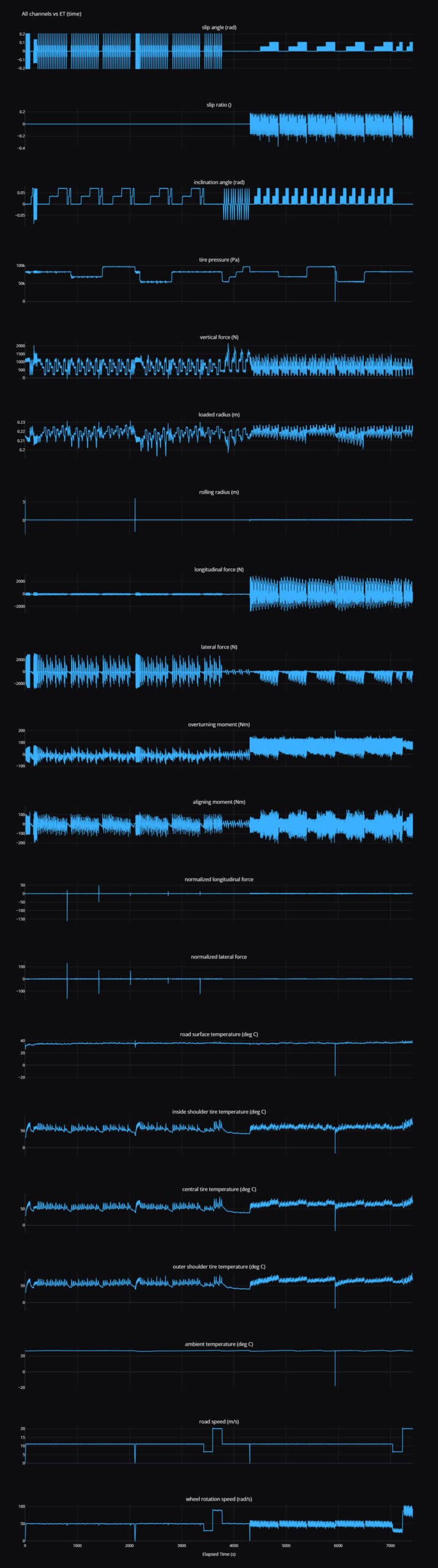
This raw data is useful for modeling the relations of the tires – and fitting models (like the Pacejka models) are useful in having coefficients which can help describe the performance of the tires – but we must first extract the useful data we want from the entire raw dataset, as shown below.
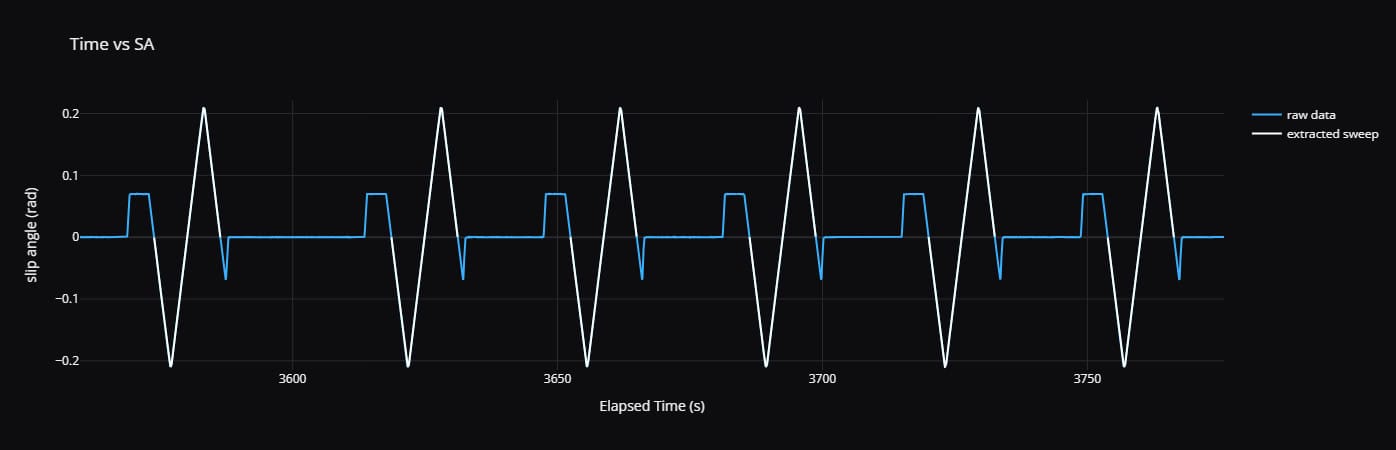
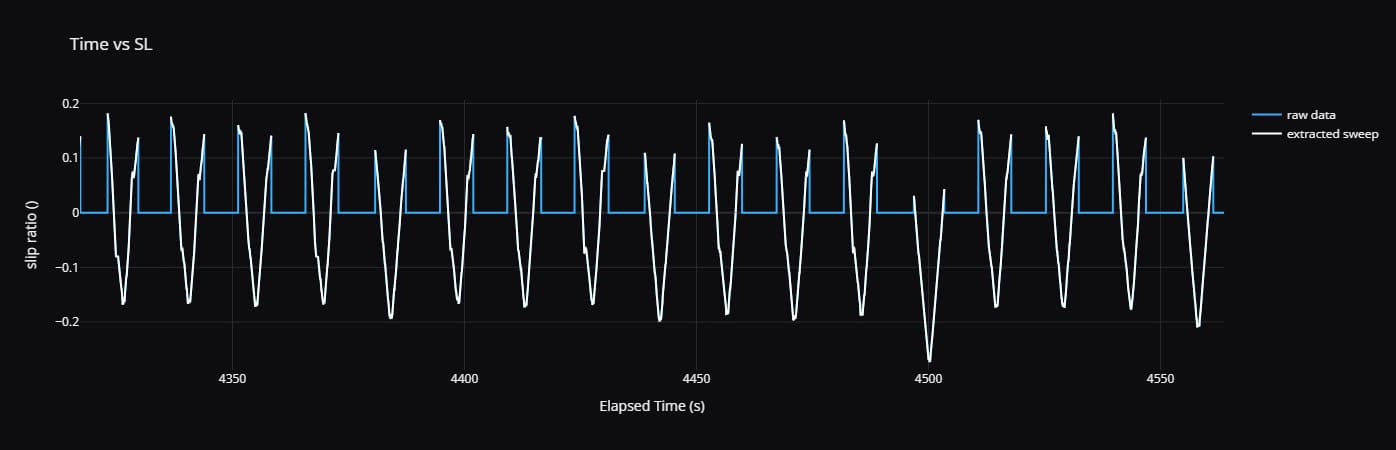
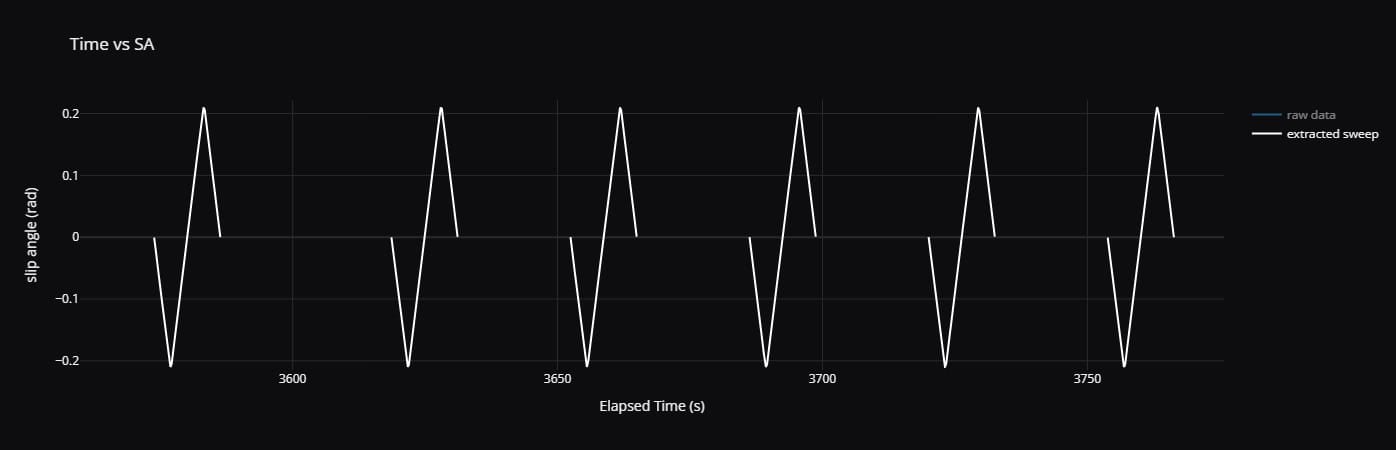
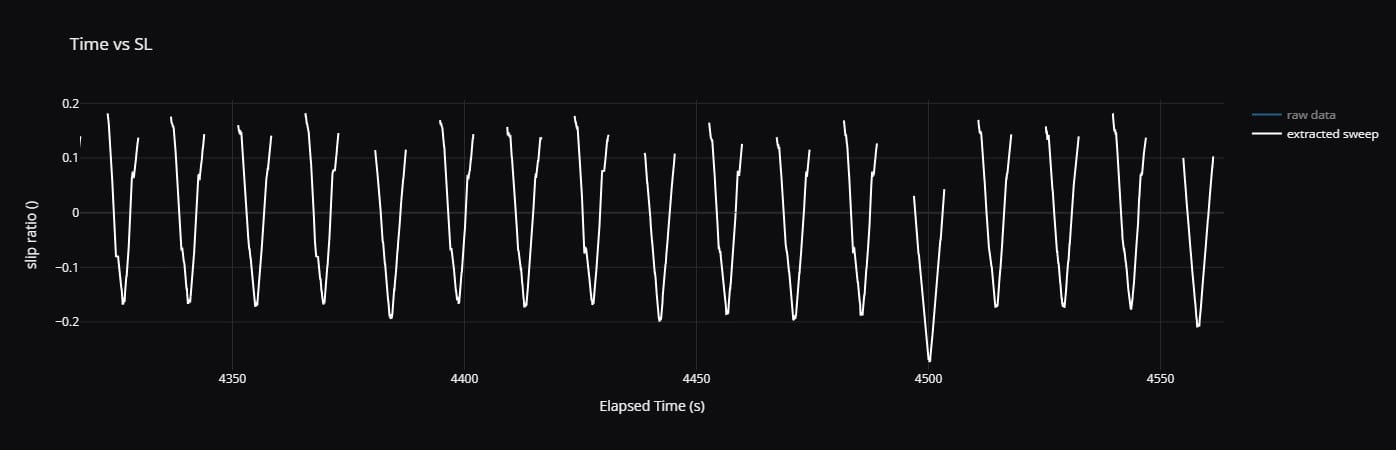
And can proceed with fitting to the model, examples of force and moment fits shown below:
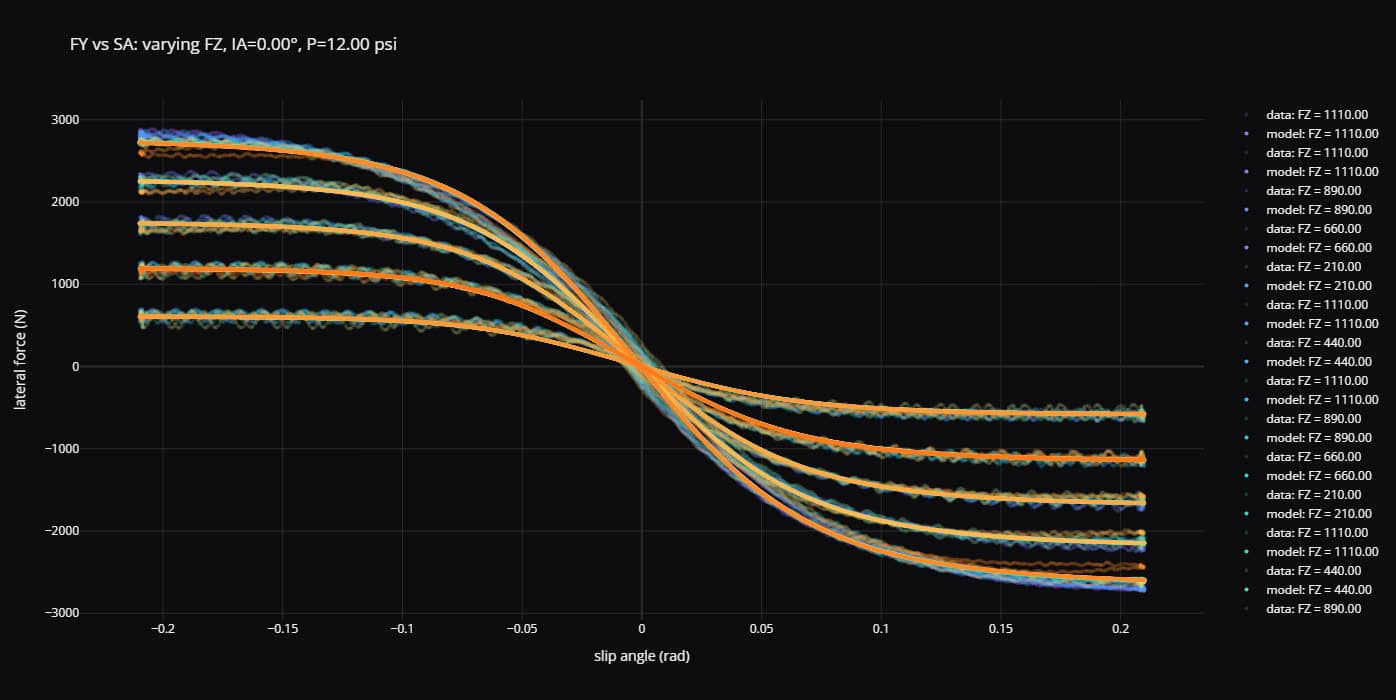
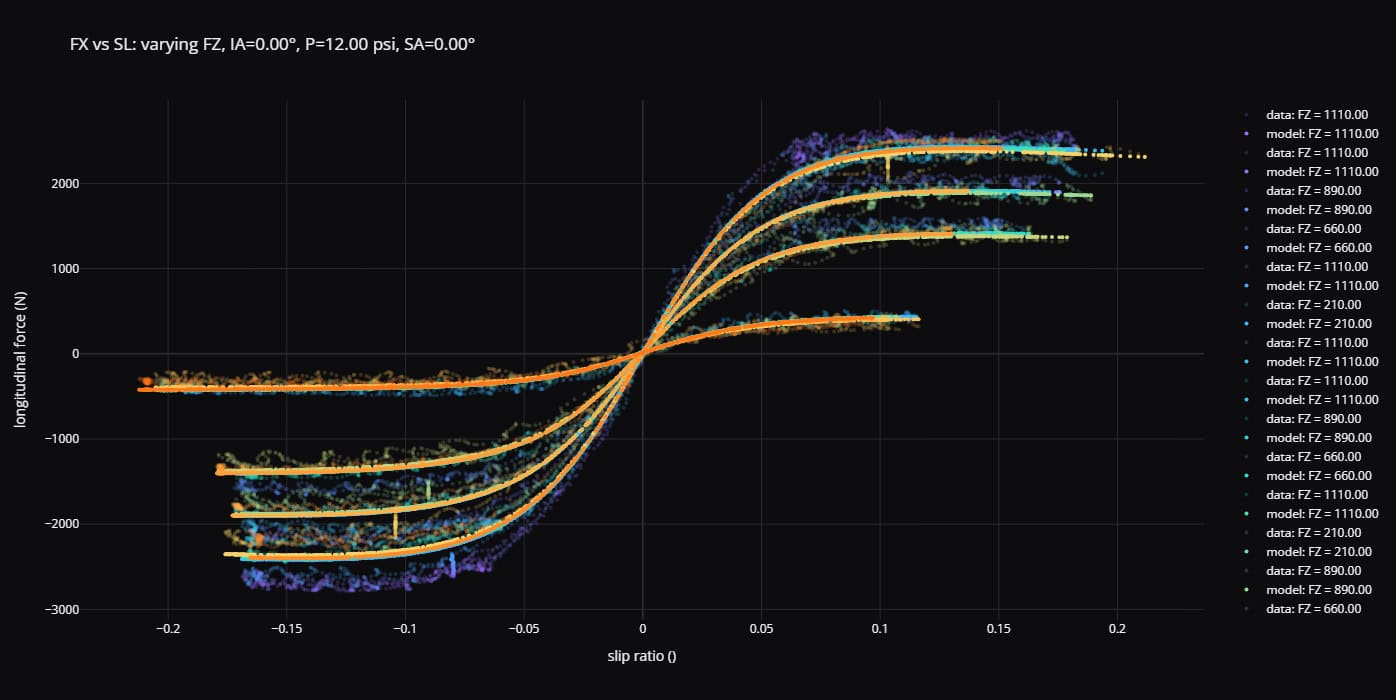
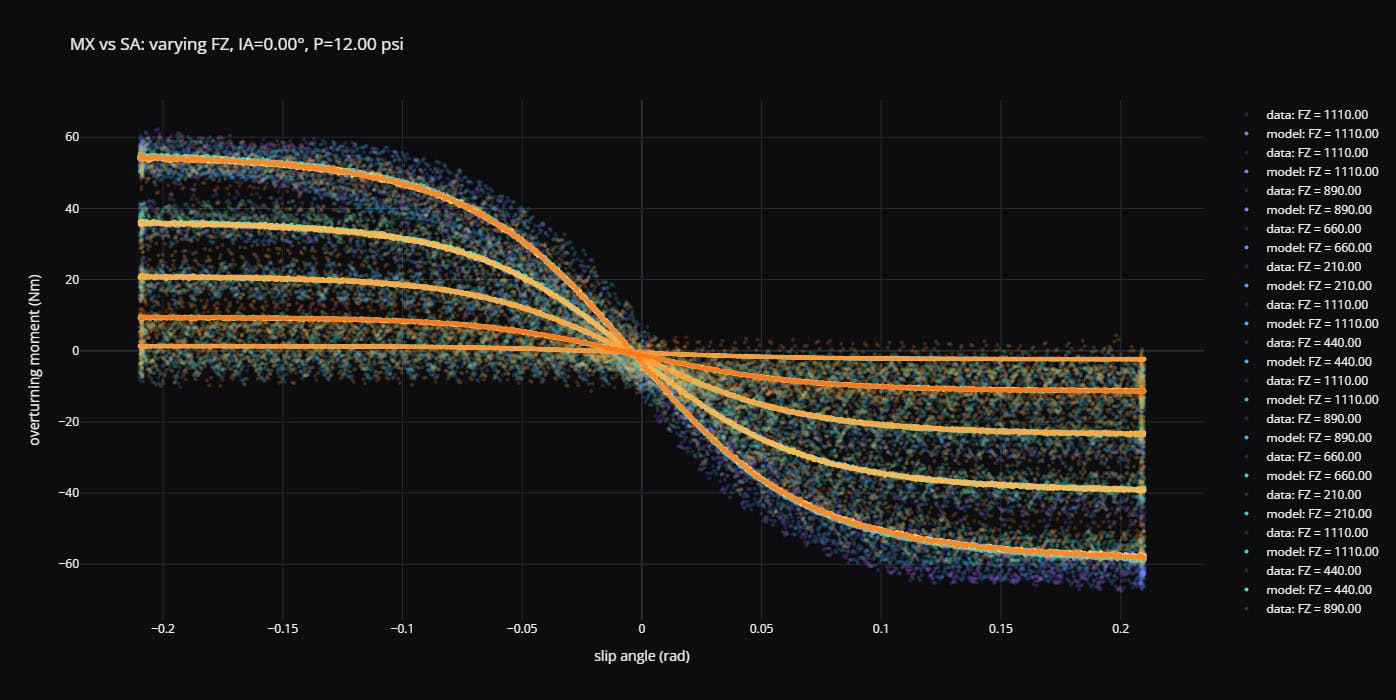
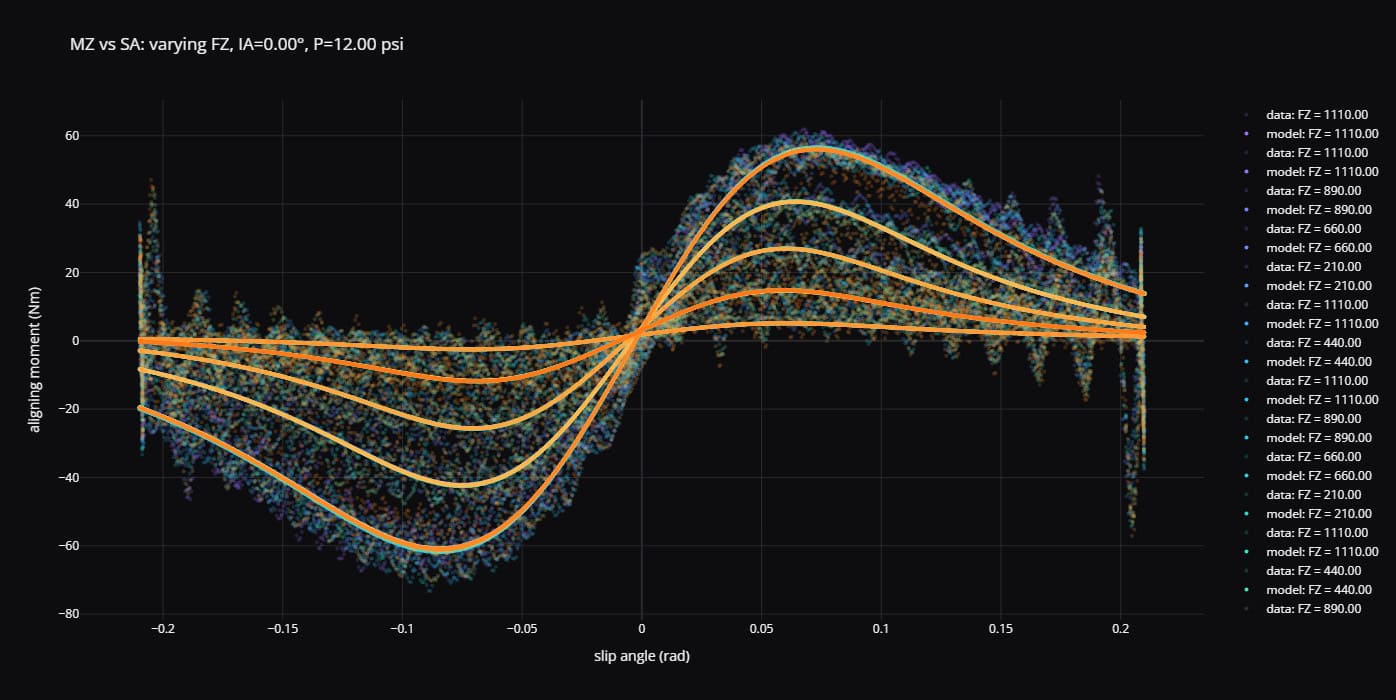
And as shown, we get models that closely fit the data for a single tire – and can now proceed to fitting other tires, and comparing the resulting models.
Tire Comparison
Repeating the above for the 5 tires shown below, we can compare the different tires to our baseline tire (Hoosier 43100 18×6.0-10 R20, 7″ rim width) and see how performance differs.
- Hoosier 43100 18×6.0-10 R20 (6” rim width)
- MRF ZDT1 18×6.0-10 (7” rim width)
- Goodyear D0571 18×6.5-10 (7” rim width)
- Hoosier 43070 16×6.0-10 R20 (7” rim width)
- Hoosier 43075 16×7.5-10 R20 (7” rim width)
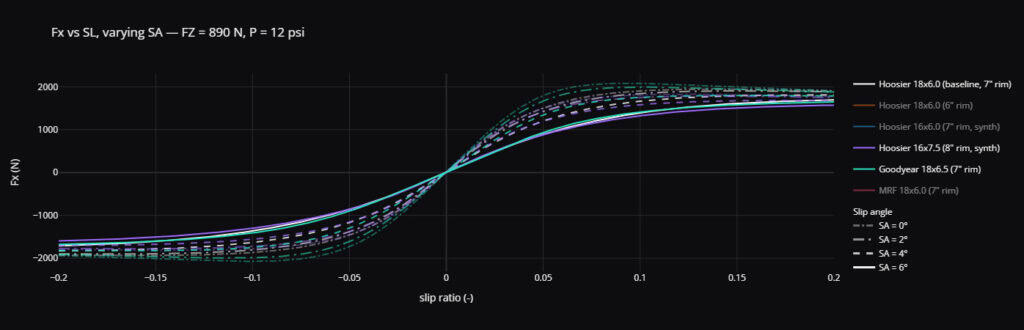
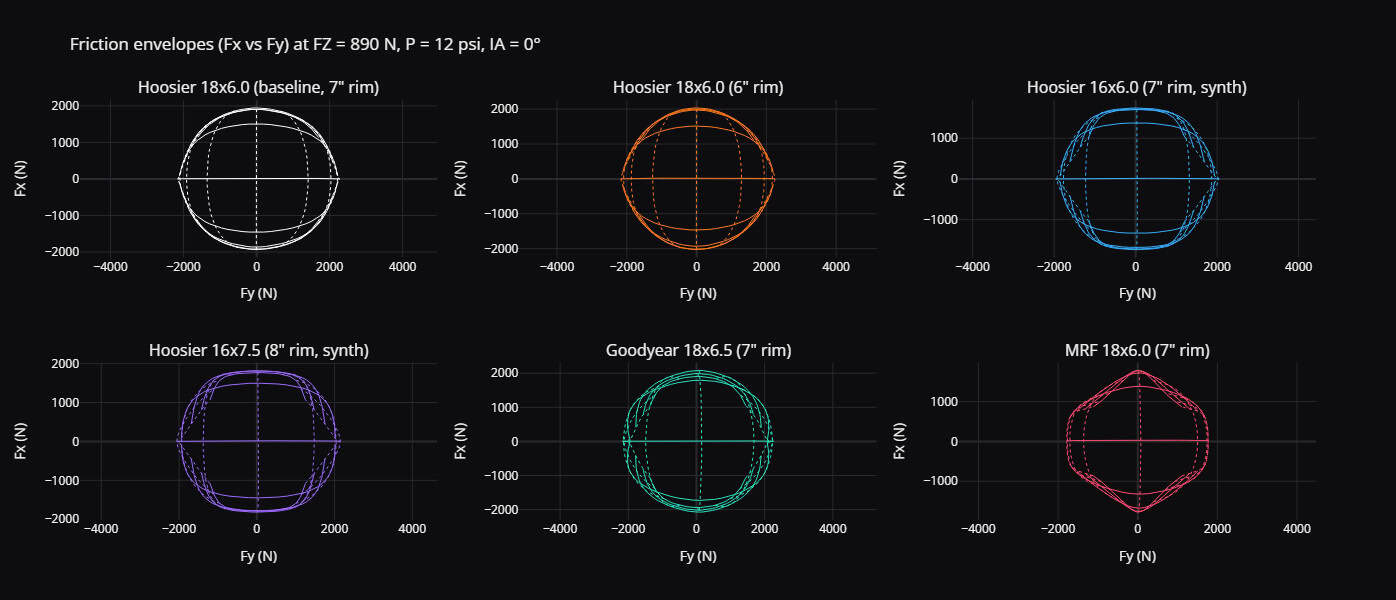
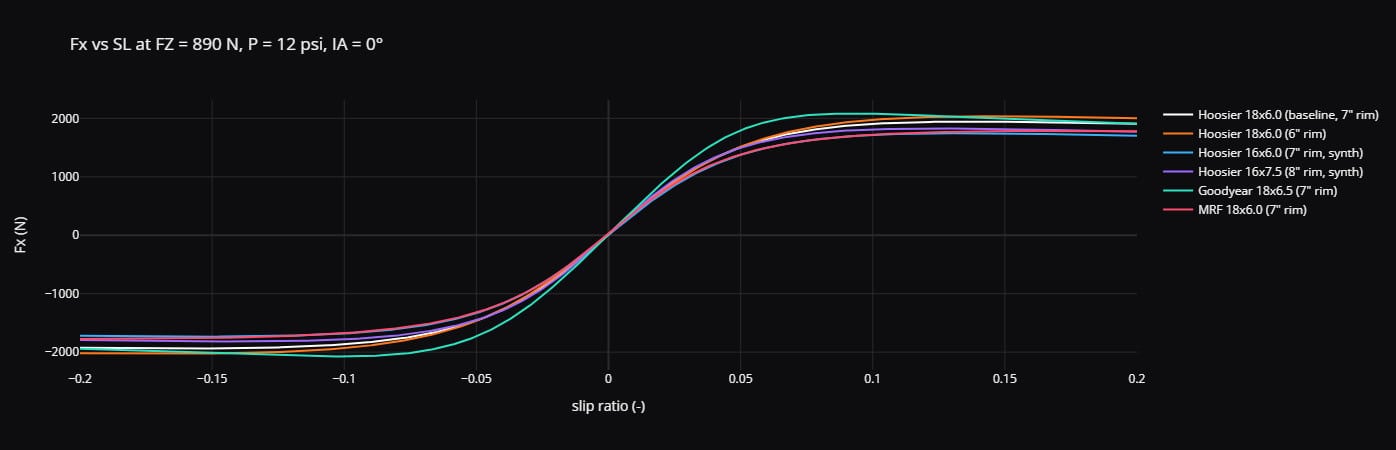
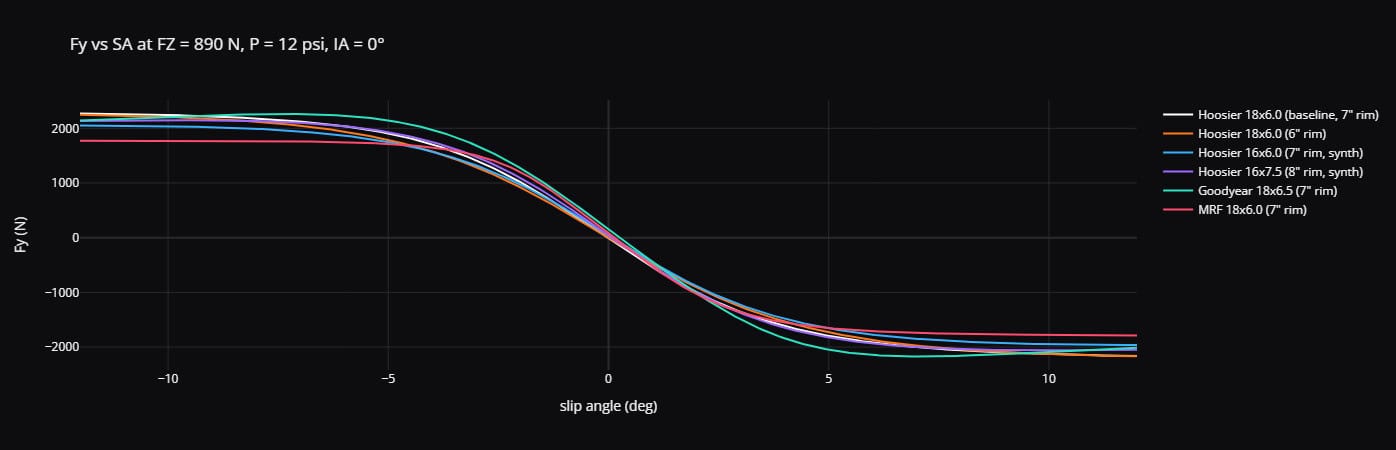
We can start by looking at the force envelopes (force limits) in x (longitudinal) and y (lateral) directions, in addition to looking at independent behavior (lateral force and slip angle, longitudinal force and slip ratio).
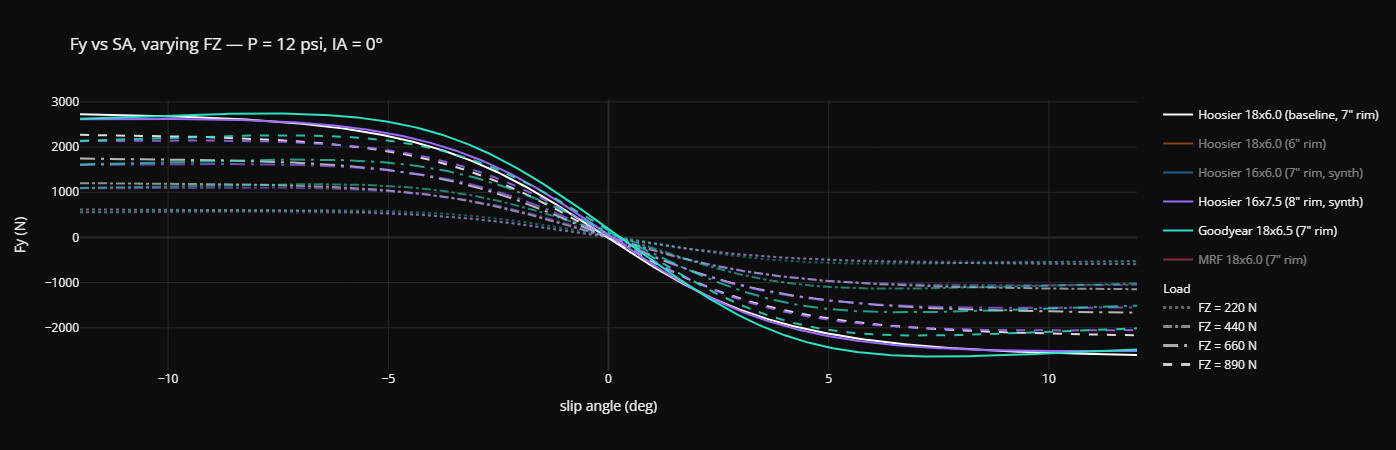
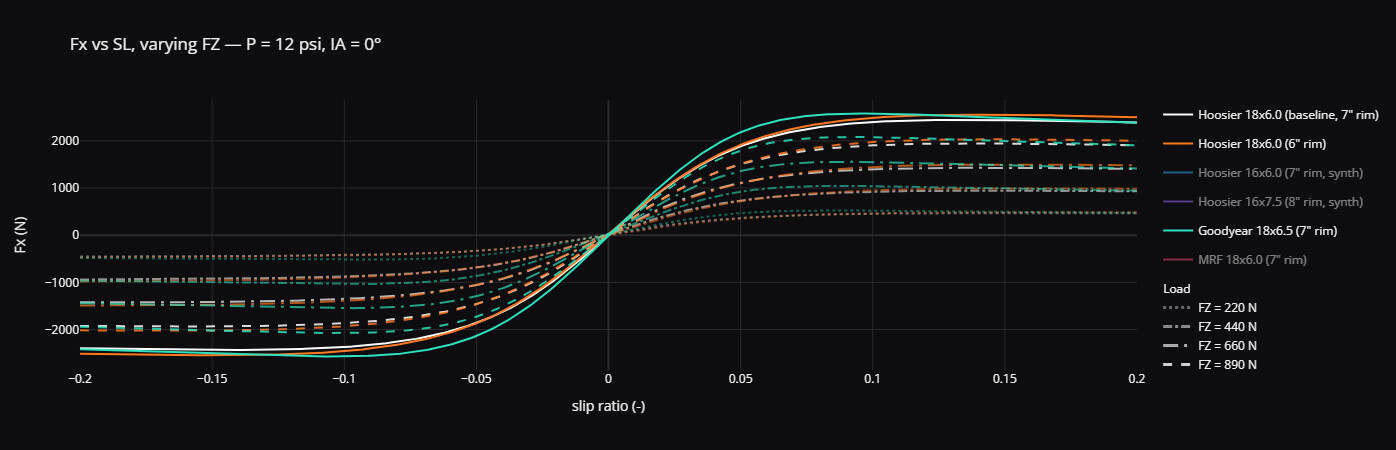
We can also look at the independent Fy/Fx performance with a variable normal force (Fz) sweep – top performers compared for clarity.
Notes so Far:
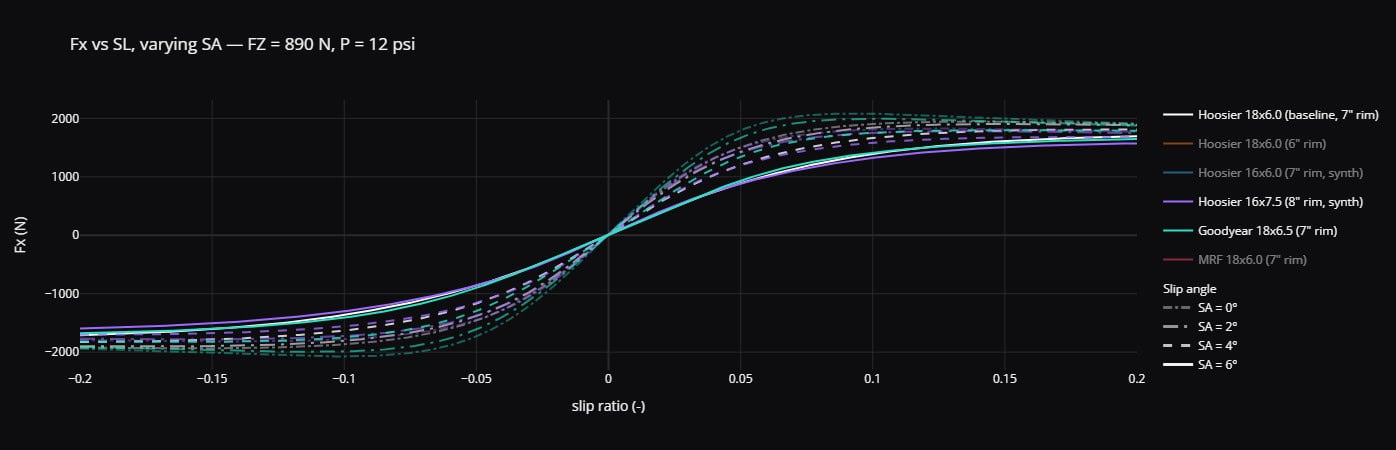
- Goodyear 18×6.5: Best performance overall, highest force limits at lowest slip
- Hoosier 18×6.0 (6/7″ rim, baseline tire): Strong performance, very comparable to Goodyear’s
- Hoosier 16″ tires: Weaker performance in pure x/y slip
- MRF 18×6.0: Weak performance, excluded from further comparison
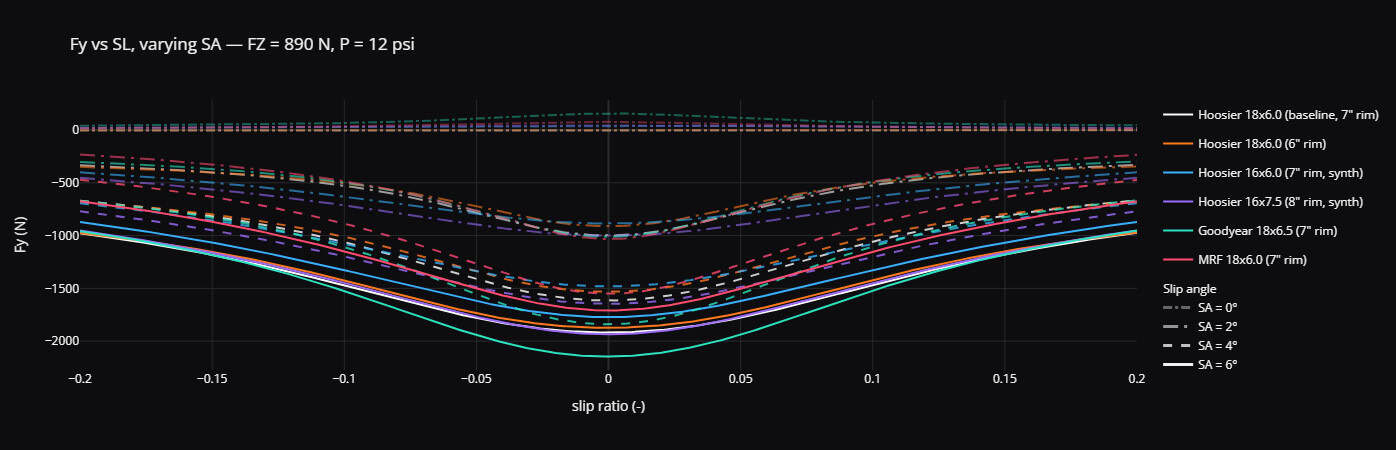
Combined Slip Tire Comparisons:
And can also look at moments:
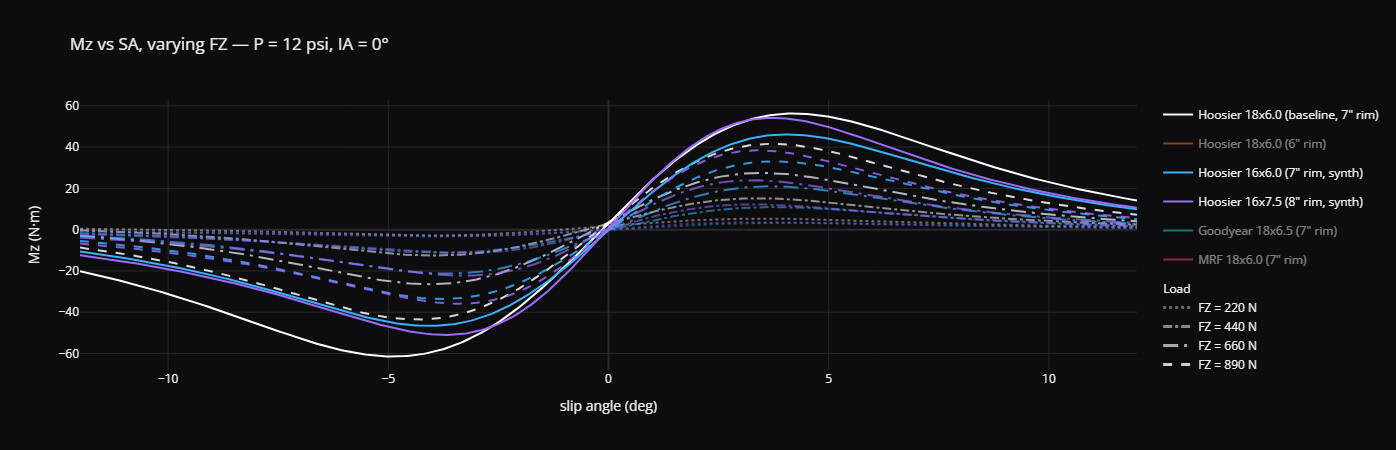
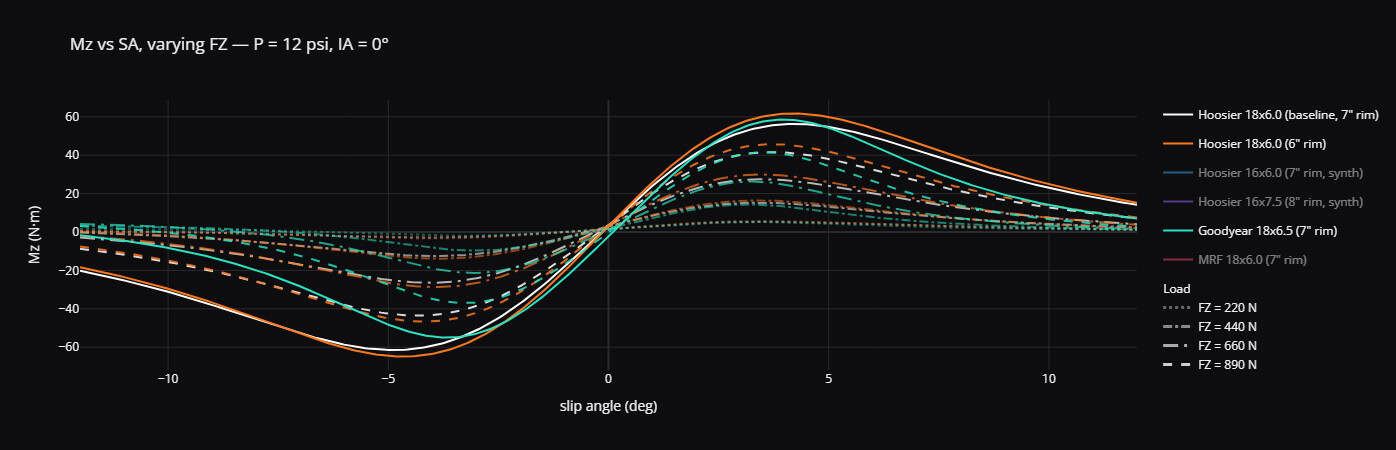
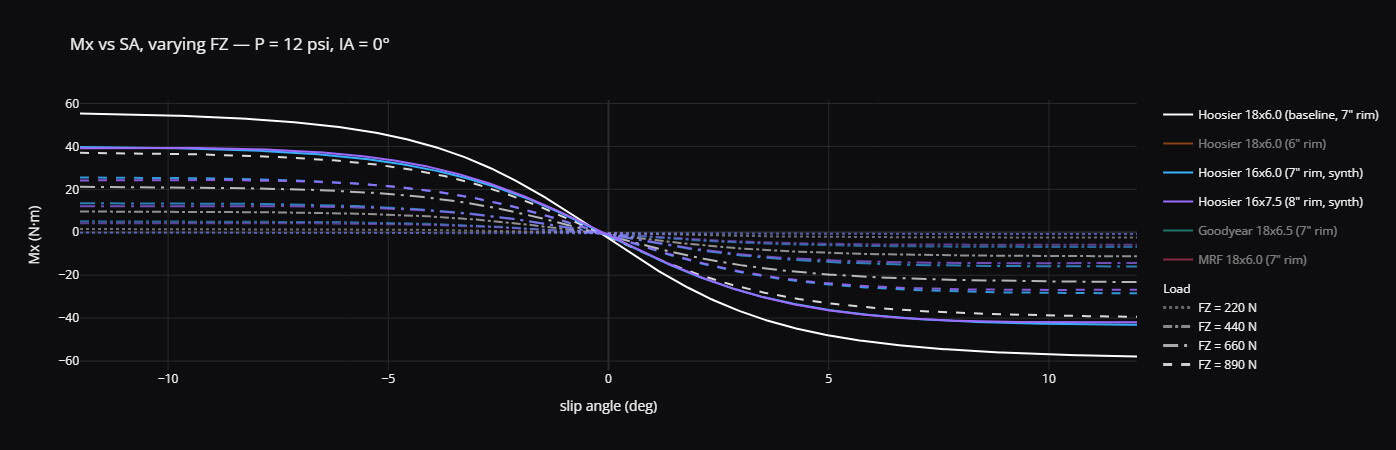
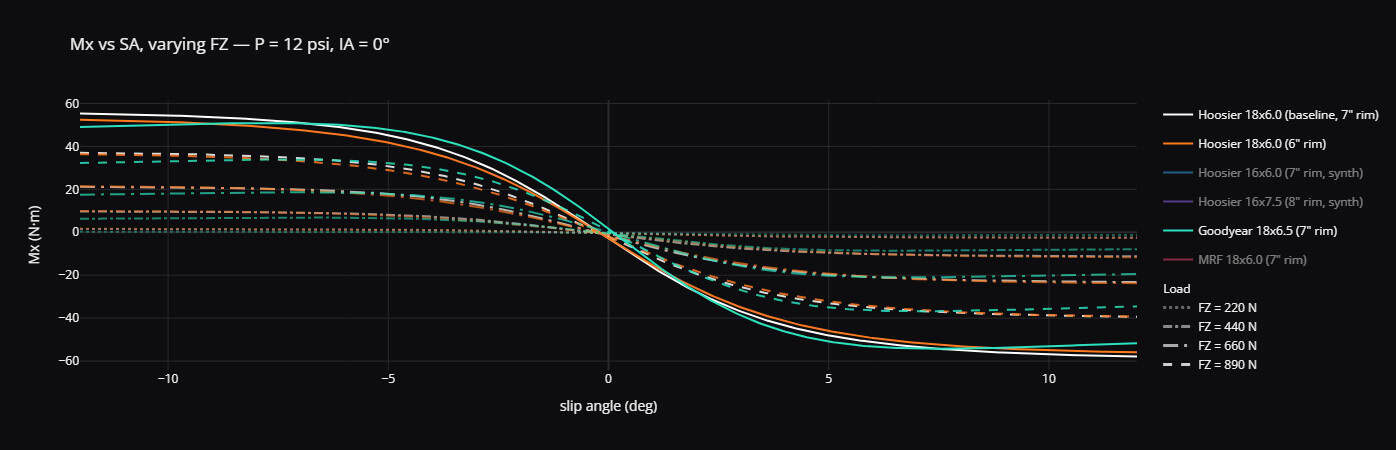
Final Notes:
- Goodyear 18×6.5: Very strong performance across the board.
- Hoosier 18×6.0 Baseline: Similar performance to Goodyear at higher slip angles. Not much difference between the 6″ and 7″ rims
- Hoosier 16″: Both 16″s perform worse than the 18″s in terms of pure capability. However, there are benefits – lower centre of gravity, lower overturning moments, and lower weight.
Conclusion
Each of the tires have their advantages & disadvantages. At a high-level, comparable Hoosier 16″ tires perform worse than the Hoosier 18″ tires; however, 16″ tires can provide many other benefits (including a lower centre of gravity, lower overturning moments, and lower overall weight).
Given that the Goodyear 18″ tires are no longer in production, we have very solid proof that the Hoosier tires we run are optimal. Though, switching over to a wider and smaller tire (like the Hoosier 16×7.5’s) could be an improvement depending on design conditions.